
How big does my ____ need to be?
I guess the answer to that question would come in two parts. First, do we live in an ideal world? And secondly, how much money do you want to spend?
All joking aside, it’s a good question to ask yourself. It’s one that I ask my clients frequently. But I live and breathe square footages, feet, and inches (and yes, even mm too). For a person who isn’t in the habit of measuring walls on a daily basis, perhaps this is the first time you’re putting a finite value on the width of your bathroom. How much space do you need for a king bed and side tables? How deep is a standard closet? Have you ever checked? 12’-6” for the king bed and 2’ for the closet if you’re curious.
If you’re planning a new house, start by measuring what you have now. Next, ask if it’s working for you. Is the length too small? Too big? Or perhaps the room is just arranged in a way that isn’t making best use of the square footage available. I’d also recommend finding the dimensions of any furniture you have currently and plan to bring with you to the next home. This will give you a frame of reference and is valuable information in the planning process. A floor plan might look spacious when it’s lines printed on paper, but trying to fit your oversized sectional into a living room that didn’t consider it from the start will only add costs to your budget if you have replace items down the road.
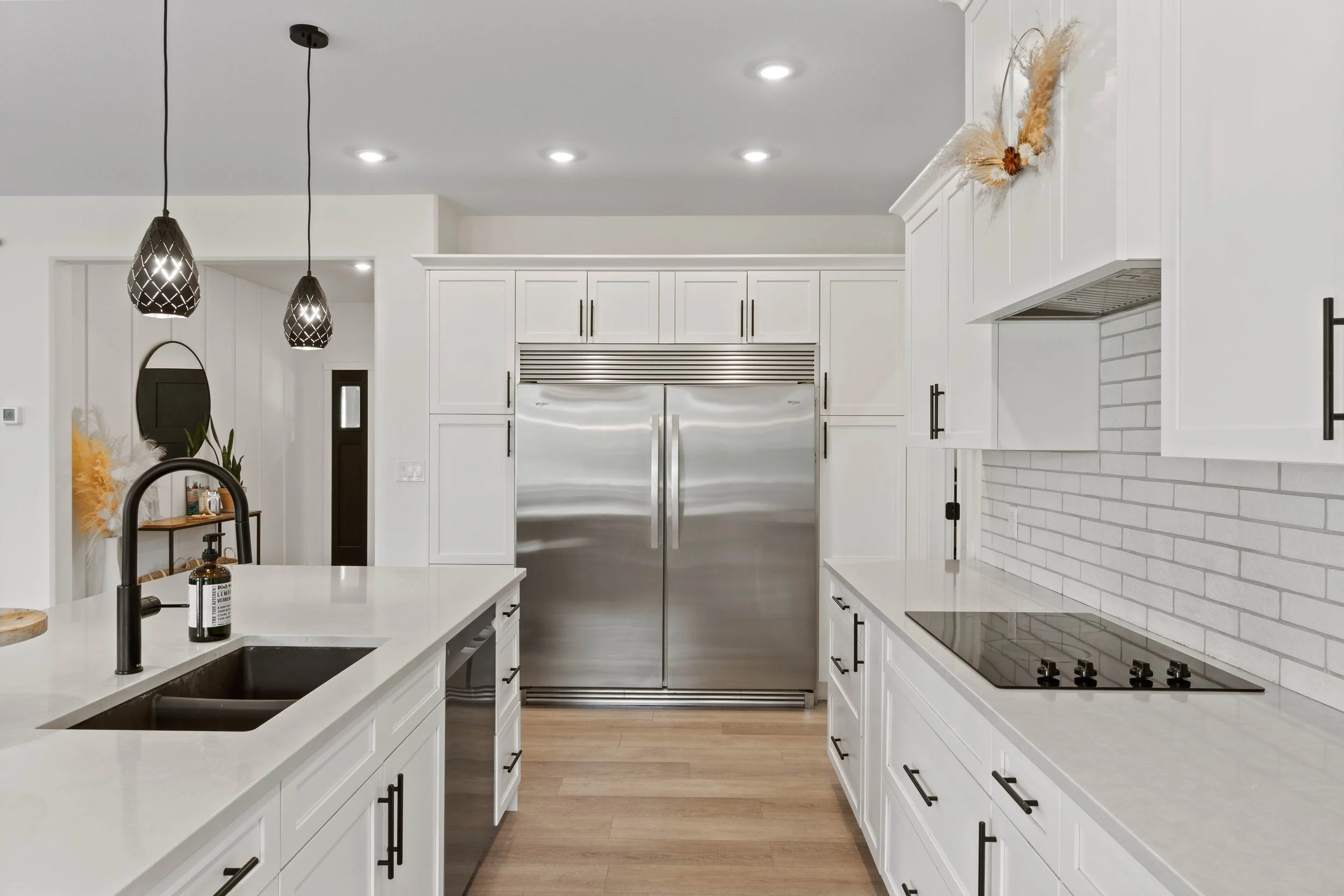
Now that you have your existing space and furniture compiled and written down (you wrote that down, right?) we can dive into our spatial designs. Here are a few of my “rules” when doing the initial design of a home.
36” minimum for a walkway or clear space. 42”-48” if two people will be in that space with some frequency, which is my preference for hallways. But also apply this in front of a bathroom vanity or between kitchen cabinets. Also, add this beside beds or to the edges of any living rooms/other spaces if that portion of the room will be use as circulation space. A 15’ living room is really only 12’ if a portion of it will also serve as a passage.
Get to know your “standard sizes”. What are your options for ranges? For refrigerators? For shower pans or freestanding bathtubs? Any website offering these products will have the dimensions listed as well. Knowing how much space each of these items occupy allows you to plan the room around them.
Don’t add the closets in after. A 10’x10’ bedroom will be far too small if you try to add a closet in after the fact. Factor in your storage space from the start. Assessing your current needs is a good indication of what your future needs will be. Look where you might have clutter accumulating regularly. Is there some storage solution that could be implemented near that drop zone to give those items a place? Perhaps that looks like a cabinetry with drawers in your mud room, or integrated laundry hampers in your bathroom vanity.
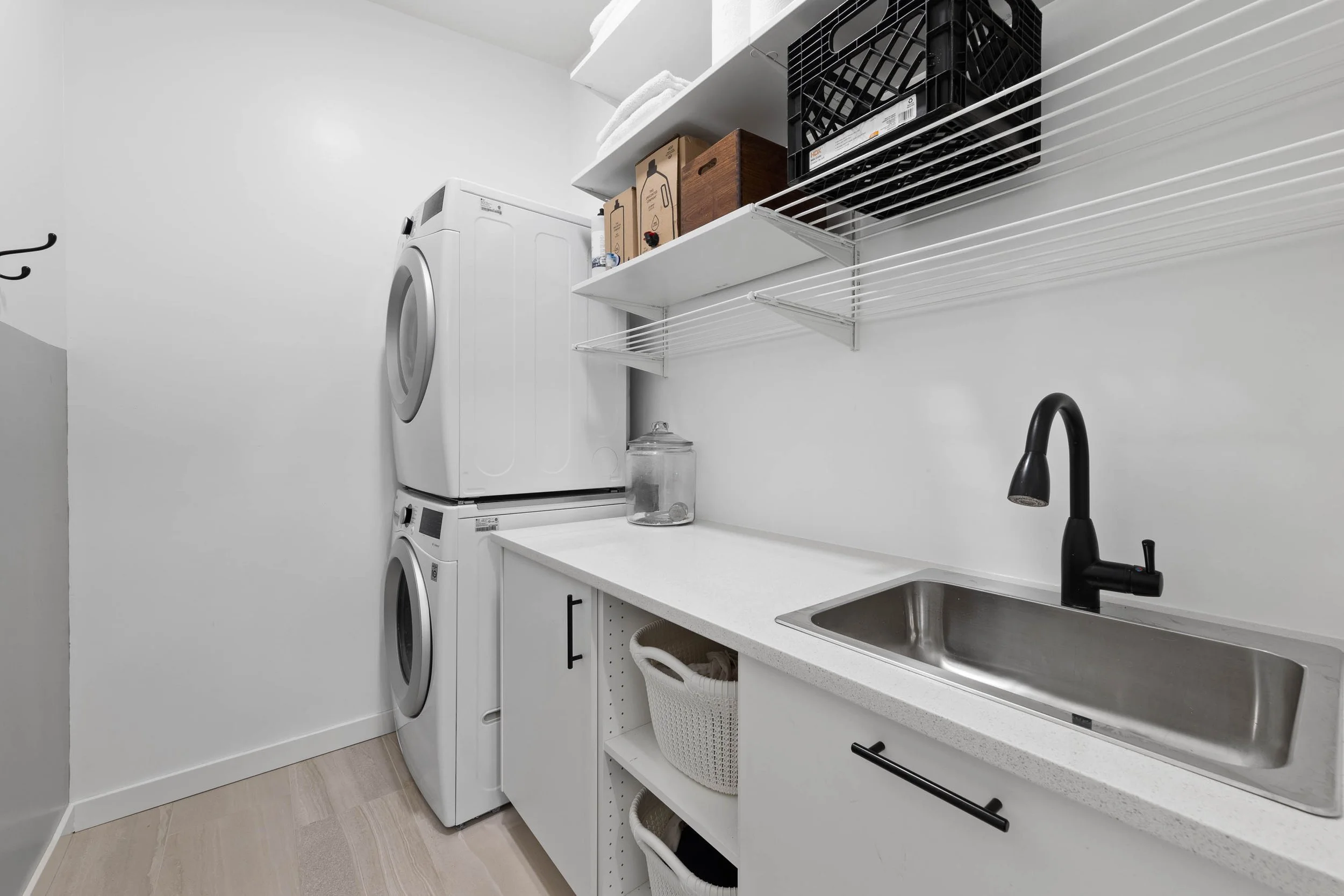
Now that you have the information, put it all together. For example, if I was approaching the design of your laundry/mud room area, here’s how I might factor in these different elements:
LENGTH:
60” space for a washer and dryer in a side by side orientation.
30” for a small laundry sink cabinet.
24” for integrated hamper cabinet
24” for drawer cabinet to drop keys/dog leash/etc.
2” for a filler piece because the last cabinet is beside a wall.
TOTAL: 11’-8”
DEPTH:
36” for washer and dryer.
60” clear space since there will be multiple people in this area at the same time (this also allows for circulation space to be maintained even while the washer and dryer doors are opened).
24” for the closet.
4.5” for the closet wall.
TOTAL: 10’-4 1/2”
There you have an approximate interior dimensions of a functional combined mud and laundry room space for a busy family. It might surprise you just how much space things take up! The final dimensions are flexible, and how it will fit into your particular home, including the size and orientation will vary greatly depending on your unique needs and preferences. This just shows you how we take existing needs as well as standard sizes and bring them together to find a starting point for the design of your new home. From there we replicate for all the other rooms you’d like and integrate each into a cohesive and efficient layout. But don’t worry, that’s our job!
